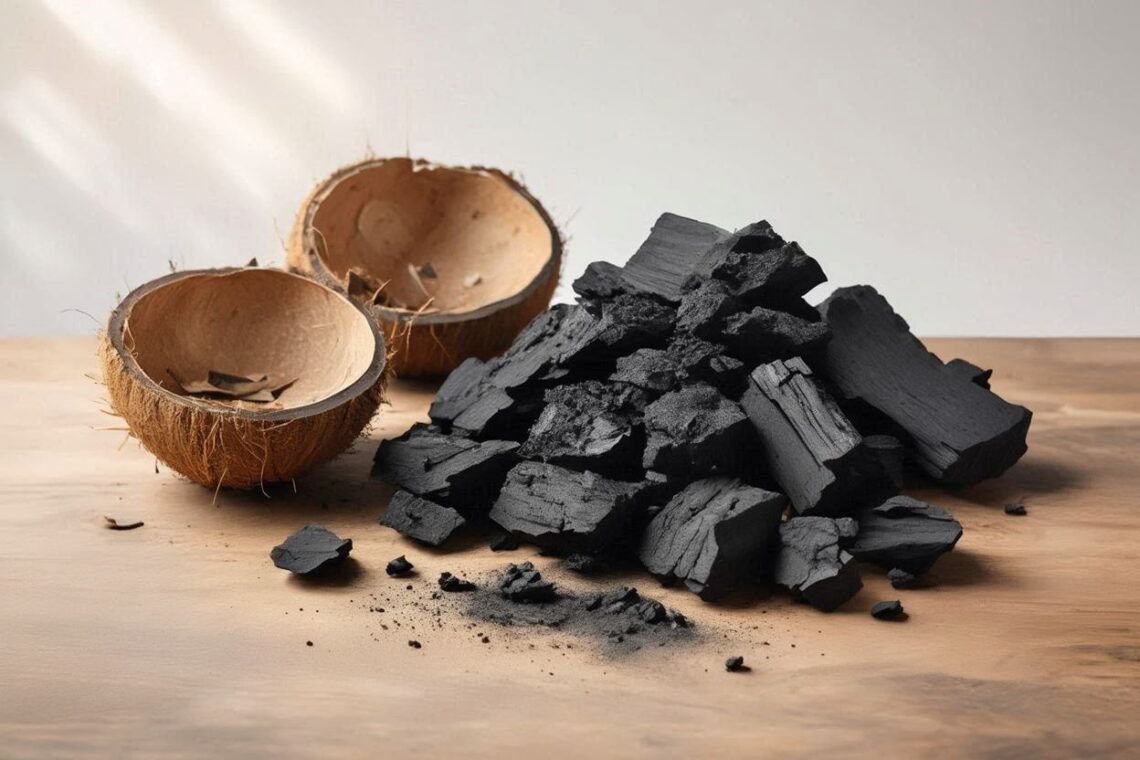
Chemical free coconut shell charcoal is increasingly recognized as a safe and natural carbon material for applications that demand purity, consistency, and environmental responsibility. As consumers and industries become more conscious of material safety, chemical-free charcoal derived from coconut shells continues to gain strong global interest.
Unlike conventional charcoal products, this type of charcoal is produced without chemical additives or artificial enhancers. As a result, it delivers clean performance while maintaining the natural properties of coconut-based carbon. Therefore, it is widely used in applications where material integrity and safety are essential.
Naturally Sourced Raw Materials
At the core of chemical free coconut shell charcoal is careful raw material selection. Producers rely exclusively on mature coconut shells, which naturally contain high levels of fixed carbon.
Moreover, these shells provide a dense structure that supports strong carbon bonding during processing. Because of this, manufacturers can achieve high-quality charcoal without introducing chemical agents or binders.
Chemical-Free Carbonization Process
The production process focuses on controlled thermal treatment rather than chemical activation. During carbonization, temperature and airflow are precisely regulated to preserve the internal carbon structure.
Consequently, volatile compounds are reduced naturally. This approach ensures the final charcoal remains free from chemical residues while maintaining stable performance characteristics.
Performance Benefits Without Chemical Additives
One of the primary advantages of chemical free coconut shell charcoal lies in its natural adsorption capability. Its microporous structure offers a large surface area that supports effective absorption and filtration.
In addition, low ash content and clean combustion contribute to improved efficiency. Therefore, users benefit from reliable performance without compromising safety or environmental standards.
Applications Across Multiple Sectors
Notably, chemical-free charcoal serves a wide range of industries. In household and lifestyle applications, it is commonly used for air purification, odor control, and natural filtration systems.
Meanwhile, industrial sectors utilize this charcoal for processing, purification, and support materials where chemical contamination must be avoided. Because of its purity, it adapts well to sensitive operational environments.
Environmental Responsibility and Sustainability
Coconut shells are renewable agricultural byproducts. By transforming them into charcoal, producers reduce organic waste and promote responsible resource utilization.
Furthermore, chemical-free processing minimizes environmental impact. As a result, chemical free coconut shell charcoal aligns with sustainability goals and supports eco-conscious production practices.
Quality Control and Product Consistency
To maintain reliable quality, manufacturers implement strict quality control measures throughout production. Moisture content, carbon purity, and particle uniformity are closely monitored.
Additionally, grading and screening processes ensure consistent specifications. Consequently, buyers receive charcoal that meets performance expectations without chemical intervention.
Selecting a Trusted Charcoal Supplier
Ultimately, choosing the right supplier is essential for ensuring chemical-free integrity. Buyers should evaluate processing methods, raw material sourcing, and quality assurance systems.
For reference, detailed product insights and natural charcoal solutions are available at natural coconut shell charcoal, which highlights material standards and chemical-free production approaches.
Additional Information and Resources
Moreover, access to verified resources helps buyers understand production transparency and supply reliability. More information can be found at wilkemachinery.com, providing guidance on coconut shell–based charcoal solutions.
Conclusion
Chemical free coconut shell charcoal remains a dependable and environmentally responsible carbon material for applications requiring purity, safety, and consistent performance. Through natural sourcing, controlled processing, and strict quality control, coconut shell–based charcoal continues to support modern needs without chemical additives.